



“We agreed during the meeting [with Russian President Vladimir Putin] that we should work toward selling the concession rights to a third, acceptable country,” Pashinian told reporters after a weekly session of his cabinet on Thursday.
Pashinian was referring to his talks with the Russian leader on the margins of an international summit in Bishkek, Kyrgyzstan, on September 1. He said the two sides had agreed that the issue of the railway concession must be resolved, stressing that “the current situation cannot continue for long.”
Moscow, however, has said it sees no reason to give up its concession rights.
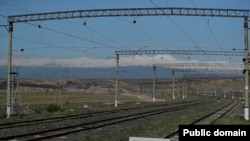
Russian Deputy Prime Minister Alexei Overchuk said on Wednesday that Russia sees no reason to transfer its rights to operate the Armenian railway to another party. He stressed that Russian Railways, or RZhD, which has operated Armenia’s railway under a 30-year concession agreement signed in 2008, “operates in Armenia in accordance with the terms of the agreement and is ready to participate in the development of the country’s infrastructure.”
The conflicting statements came after Pashinian renewed his calls for the Russian concession to be transferred to a third country acceptable to both Armenia and Russia. Observers have named Kazakhstan among possible candidates to take over the concession.
Since the beginning of the year the Armenian prime minister has argued that Russia’s deteriorating relations with the West are putting Armenia at a competitive disadvantage in the region and discouraging international investors from using its railway network for transit.
Pashinian also alluded to the issue during the public portion of his meeting with Putin, proposing that they discuss the situation of “unprofitable Russian companies operating in Armenia.” Although he did not name a specific company, it is known that the South Caucasus Railway has largely operated at a loss since coming under Russian management.
Putin said after Tuesday’s meeting with Pashinian that the railway issue would also be discussed at their next talks in Moscow, but referred only to possible investments and did not mention transferring its management to another country.
“Investments in such infrastructure depend on the volume of freight traffic,” Putin said, expressing hope that the situation in the region would change after the end of the Armenian-Azerbaijani conflict over Nagorno-Karabakh, including with the opening of Armenia’s border with Turkey and other routes, potentially generating greater freight flows.
“If [freight traffic] emerges, anyone can make investments, and Russia can do it as well,” Putin said.
Earlier, Moscow warned that if Armenia terminated its agreement with RZhD, it would have to compensate the Russian company for investments it made since taking over the Armenian railway. RZhD chief executive Oleg Belozerov put the amount at around $400 million.